

You already know the feeling. You spent an hour on hold. You repeated your account number to four different people. You got transferred. You got disconnected. You got told a supervisor would call you back. Nobody called.
The executive email carpet bomb is what you do next. It’s not a metaphor and it’s not a hack. It’s a real technique, named in 2007 by the old Consumerist blog, and it still works in 2026 because corporate org charts haven’t changed: when an executive forwards a complaint down to a manager, that manager moves on it the same day. A regular ticket sits in a queue. A delegated ticket has a name attached. That’s the whole trick.
Most articles about the executive email carpet bomb tell you what it is and stop there. This one is different. You’re going to leave with a copy-paste email template, a 2026 method for finding executive email addresses without paying for a tool, a follow-up cadence that actually closes the loop, and the line between firm-and-effective versus ranty-and-ignored. I’ve used some version of this when normal channels stopped working, and I wrote a fuller take on emailing the CEO a while back. This post zooms in on the carpet bomb specifically.
What an Executive Email Carpet Bomb Actually Is (And Why It Still Works in 2026)
The executive email carpet bomb is a single email sent to multiple senior executives at a company at the same time, laying out a complaint and a clear ask. The original Consumerist piece called it the EECB, and the name stuck.
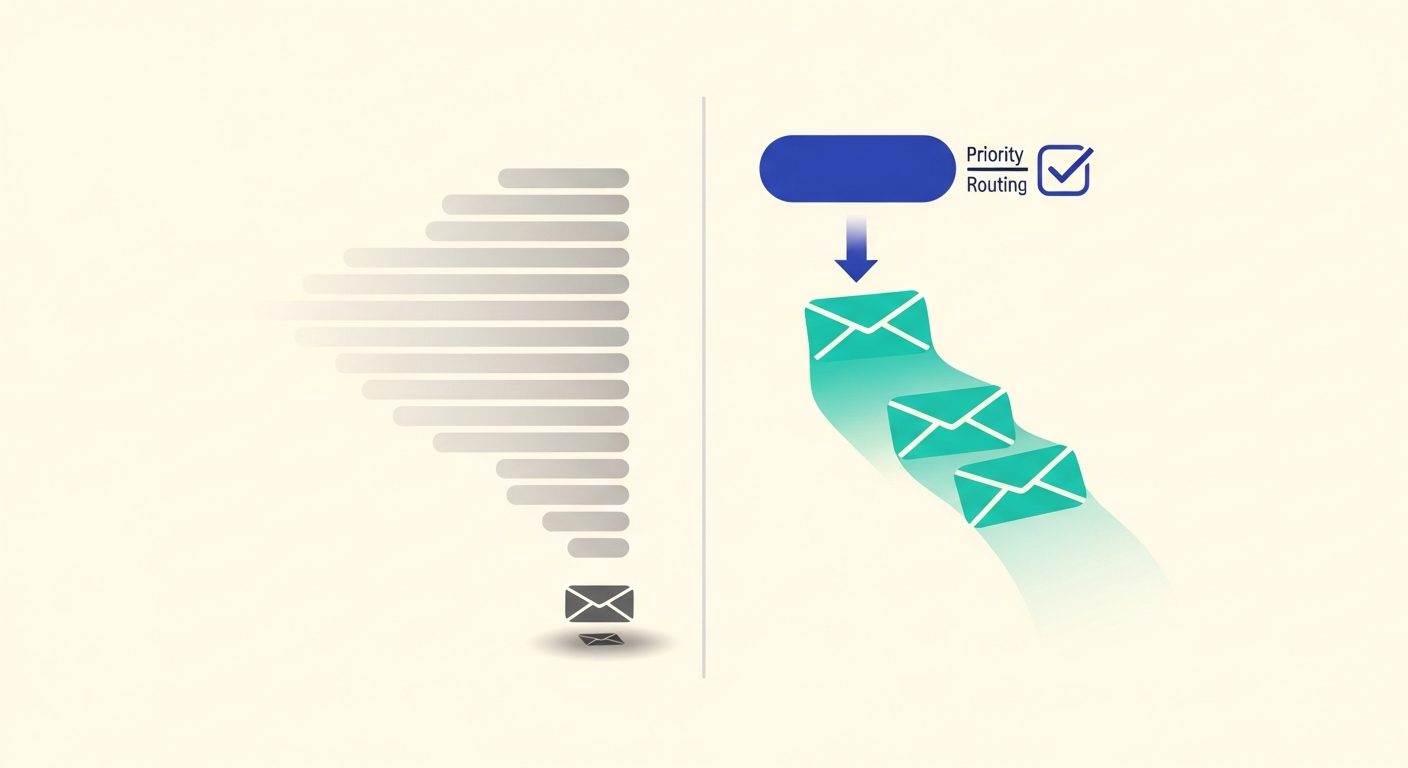
It works because of how big companies handle inbound complaints. The customer service queue is a black hole on purpose. Tickets are routed by topic, not by importance. There’s no one whose career depends on closing yours. But when an email lands in a VP’s inbox, that VP forwards it to whoever owns the function, and now there’s a person whose Monday morning includes “find out what happened with this customer.” That person has incentive. The original ticket queue does not.
This isn’t about embarrassing executives. They get plenty of email. It’s about getting your case in front of someone who can route it to action.
When to Use It and When You’re Going to Burn Yourself
Most guides skip this part. The carpet bomb is a tool. Use it wrong and you get nothing, and worse, you get tagged internally as “that customer.”
Use it when:
- You’ve already tried the normal channels and gotten nowhere.
- You have documentation. Order numbers, ticket numbers, dates, screenshots, receipts.
- Your ask is reasonable. Refund the charge, honor the warranty, fix the billing error, cancel the subscription you said you canceled.
- The dollar amount or the harm justifies the move. A $12 dispute isn’t a carpet bomb situation. A $400 mischarged subscription is. A canceled flight you can’t get refunded is. A warranty claim being ignored is.
Don’t use it when:
- You haven’t actually tried customer service yet. You’ll burn the goodwill of the technique on a problem the front line could have fixed.
- You’re emotionally hot. Cool off. Write the email, then sit on it for a couple hours.
- You don’t have a paper trail. You’ll get asked for one and you won’t have it.
- You’re asking for something the company genuinely can’t do (refunding a non-refundable, non-fraud charge from three years ago, for example).
If you’re nodding along to the “use it when” list, keep going.
Step 1: Find the Right Email Addresses (Without Paying for Apollo)
You don’t need Apollo. You don’t need Hunter. You don’t need a $99/month sales tool. Here’s the free path that works in 2026.
Find a name first. Go to the company’s website. Look for an “About,” “Leadership,” “Our Team,” or “Investor Relations” page. You’re looking for the CEO, the COO, the head of customer experience, the head of operations, and the chief marketing officer. Five names is plenty. Don’t go past ten.
Find the email format. This is the trick most people miss. You don’t need to guess. Find one published email address from the company and the rest follow the same pattern. Two ways to do that:
- 1. Search the company’s press releases. Press contacts at the bottom of any release will say “media@company.com” or “jane.smith@company.com” or “j.smith@company.com.” That’s your format.
- 2. Search for the company name plus the word “press” or “PR” on Google. Same result.
Common formats are:
- firstname.lastname@company.com
- firstinitial.lastname@company.com
- firstinitiallastname@company.com
- firstname@company.com (smaller companies)
Verify before you send. Open Gmail. Compose a new message. Type the address you guessed and tab out of the field. If Gmail auto-suggests a name or a profile photo, the address exists. If nothing happens, it might still be valid, but if you typed something obviously wrong (like a typo), Gmail will sometimes flag it. This is a soft check, not a hard one. The real verification is the email going through.
Don’t bother with general inboxes. Skip support@, help@, contact@. They route to the same queue you’ve already exhausted.
Step 2: A Subject Line That Actually Gets Opened
Subject lines decide whether your carpet bomb is read or auto-archived. Three rules.
Be specific. Include an order number, an account number, or a date. “Account #4429183 – billing dispute, two weeks unresolved” lands. “PLEASE HELP” does not.
Don’t shout. No all-caps. No multiple exclamation points. No “URGENT” prefix. Executives have spam filters and they have human filters. Both filter on tone.
Don’t threaten. No “I’ll sue.” No “I’m going to the BBB.” Save those for the body if you need them, and frame them as next-steps, not threats. Subject-line threats get binned.
A few patterns that work:
- “Account #[number] – [issue type] unresolved since [date]”
- “Refund request for order #[number] – escalating after no response”
- “Warranty claim #[number] – 30 days, no movement”
- “Billing error on [date] – [dollar amount] mischarged”
Each one tells the executive’s assistant exactly what this is in five seconds. Five seconds is all you get.
Step 3: The Email Itself (Copy-Paste Template)
Keep it short. One screen on a phone. Executives skim. Their assistants skim harder. Long emails get triaged later. Short emails get forwarded now.
Here’s the template. Fill in the brackets.
Subject: Account #[NUMBER] - [ISSUE] unresolved since [DATE]
Dear [EXECUTIVE NAMES],
I'm a [length of relationship] customer of [COMPANY]. On [DATE], [brief
description of what happened in one sentence]. Reference: order/ticket
#[NUMBER].
Here's what I've already done:
- [Date]: Called customer service. Was told [outcome].
- [Date]: Followed up via [channel]. Was told [outcome].
- [Date]: [Any other escalation step you took].
I'm writing to you directly because the standard channels have not
resolved this. I'm asking for [specific, reasonable ask in one sentence].
I'd appreciate a response by [date 5-7 business days out]. I've attached
[receipts, screenshots, prior correspondence] for context.
Thank you for your time.
[Your full name]
[Your phone number]
[Your email]
[Your account number again]
That’s it. Six short paragraphs. Notice what’s not there: no rant, no history of the company’s decline, no comparison to competitors, no threats. Just the case, the timeline, the ask, and the deadline.
For billing disputes specifically, add one line under “what I’ve already done”: “I have not initiated a chargeback, but I will be required to if this isn’t resolved by [date].” That’s not a threat. That’s a fact. Banks give you 60 days. You’re stating the timeline.
One honest aside. Finding the addresses and writing the email are the two steps people stall on, so a while back we built a tool that does both. It’s called DearCEO.wtf. You give it the company and your problem, it finds the executive email addresses and drafts the carpet bomb in the firm-not-ranty tone you’ll see below, then you copy the email into your own inbox and send it yourself. It automates the grunt work in this post, nothing more. The manual method here works exactly the same, so use whichever you want. I’d just rather tell you the tool exists than pretend I didn’t build it.
Step 4: How to Actually Send It
This part trips people up. The right way:
To: Put your own email address in the To field.
Bcc: Put all the executive addresses in Bcc, plus the company’s general support email.
Why Bcc? Two reasons. One, executives don’t want to see they’re on a list with four other executives. It looks like a mass blast. Two, when one of them replies, you don’t want them to also reply-all to the rest of the C-suite.
Send during their business hours. East Coast company? 9 to 11 AM ET. West Coast? 11 AM to 1 PM ET. Tuesday through Thursday is best. Mondays everyone is catching up. Fridays everyone is checking out. Weekends it sits unread until Monday and gets buried.
Don’t send from a throwaway address. Use the email tied to your account so the assistant who handles the executive’s inbox can verify you’re a real customer in 30 seconds.
Step 5: The Follow-Up Cadence Most Guides Skip
Most articles end at “send the email.” That’s where most carpet bombs die.
Day 1 (send day): You send the email. You wait. Don’t send a follow-up the same day. You’ll look frantic.
Day 3 (or 2 business days later): No reply? Send a single, short follow-up. Reply to your original email so the thread stays together. Keep it to two sentences:
Following up on my note from [DAY]. I'd appreciate any update or a
referral to the right person. Account #[NUMBER].

Thank you,
[Your name]
Day 5-7: If you got a reply, reply back fast. Executives delegate to assistants who delegate to managers. The chain breaks if you go silent. Reply within a few hours when you can.
Day 7-10: Still nothing? You have options. The BBB complaint route. The state Attorney General consumer protection division (this one is underused and surprisingly effective with regulated industries: telecom, utilities, financial services). A polite public mention of the company on social. A chargeback through your card if it’s a billing issue.
The carpet bomb is the opening move. The follow-up is the close.
Firm and Effective vs Ranty and Ignored
The line between an email that gets you results and an email that gets you ignored is tone. Two examples on the same complaint.
Ranty and ignored:
I have been a customer for 12 years and this is absolutely UNACCEPTABLE. Your customer service is a joke. I have spent HOURS on hold. Nobody knows what they’re doing. I want a full refund and an apology and I’m going to make sure everyone knows how badly you treated me. This company has gone downhill and I am DONE.
That gets binned. It reads as venting, not as a case.
Firm and effective:
I’ve been a customer since 2014. On April 1, I was charged $89 for a service I canceled in writing on March 15 (ticket #44291). I called support twice (April 3 and April 7) and was told the cancellation was not on file. I’m asking for a refund of the $89 and confirmation that the service is now canceled. Receipts and prior correspondence attached. I’d appreciate a response by April 24.
That gets forwarded. It reads as someone who has a documented case and is a step away from a chargeback.
The same complaint. Different framings. One reads like a problem to solve, the other reads like a problem to avoid.
Realistic Expectations: What Actually Happens After You Send an Executive Email Carpet Bomb?
You will not always get a same-day reply. You will not always get exactly what you asked for. You will sometimes get nothing.
Here’s a rough sense of how this tends to go, ordered most common to least:
- Reply within 1-3 business days from a delegate: The most common outcome. An executive assistant or a customer experience director picks it up. They get on the case.
- Same-day reply with a fix: The dream. More likely with smaller companies where the CEO actually reads their inbox.
- Partial fix: You asked for $400 back, you got $250 plus an apology. Take it. The carpet bomb worked. Litigating the remaining $150 burns more goodwill than it’s worth.
- Polite no: You get a “we’ve reviewed your case and our position stands” email. That’s still useful. It’s now your written record for the BBB or chargeback round.
- Silence: It happens. Move to plan B: BBB, state AG, chargeback, social.
The technique tilts the odds. It doesn’t guarantee. Anyone who tells you it’s foolproof is selling you something.
Quick Answers to the Questions Everyone Asks
Is the executive email carpet bomb legal?
Yes. You’re sending a polite email to publicly available business email addresses about a customer relationship you have with the company. It’s not harassment, it’s not spam, and it’s not threatening. Keep it firm and factual and you’re fine.
Can the company ban me from the service?
Almost never, if your email is professional. Companies don’t ban paying customers for complaining. They might flag your account internally so future tickets get more attention, which is honestly what you want.
Does it work for small companies?
Often better. With a 50-person company, the CEO actually reads their inbox. Your email might land directly in front of the person who can fix the problem in five minutes.
Does it work for federal agencies and regulated industries?
For federal agencies, this is the wrong tool. Use your representative’s office or the agency’s Inspector General. For regulated industries (telecom, banking, utilities, insurance, airlines), the carpet bomb works AND your state AG and the relevant federal regulator (FCC, CFPB, DOT, etc.) are real escalation paths if it doesn’t.
Should I CC a journalist?
Only if your story is genuinely newsworthy and you’ve already exhausted everything else. Don’t CC a reporter on a $200 dispute. They’ll ignore you and the company will write you off as a bluffer.
Sources
- How To Launch An Executive Email Carpet Bomb (Consumerist, 2007) – the origin of the term.
- Fed-up consumers ’email bomb’ execs, get results (NBC News) – reporting on the technique’s effectiveness.
- One Columnist On The Foolproof Customer Service Trick (WBUR, Here & Now) – radio coverage with consumer-advocate context.
- How to Skip the Runaround and Email the CEO (Big Guy on Stuff) – my fuller take on the broader email-the-CEO play.
Your Turn
Have you ever pulled an executive email carpet bomb? What happened? Drop the story in the comments. The wins are fun, but the half-wins and the silences teach more. And if you’ve got a refund or a warranty fight you’re stuck on right now, write the email, sit on it for two hours, then send it. Worst case you wait three days. Best case you have your money back by Friday.
If you’d rather skip the manual hunting and drafting, DearCEO.wtf is the tool we built to do both for you. It finds the executive emails and writes the draft. You still hit send.
Subscribe and share if this saved you a phone call.